
Home »
Categories
Blog Articles and News
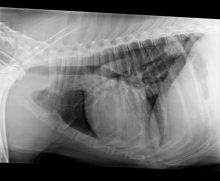
Canine Lung Tumours
Soft Tissue |
Canine lung tumours are uncommon but are usually seen in older patients typically 9-12 years of age. They are usually malignant with the vast majority (97%) being carcinomas. We do very occasionally see benign masses (e.g. pulmonary lipoma) but these are considered very rare.

Eastcott Referrals Intern presents to BrAVO
General Blog and News |
Under the guidance of our ophthalmologists Ida Gilbert and Mark Ames and our soft tissue surgeon Poppy Bristow, Intern Malwina Kowalska performed a retrospective study evaluation into the outcomes in over 150 phacoemulsification treatments for cataracts at Eastcott Referrals. She presented this to the BrAVO at BSAVA.
Vacancies for 6 Veterinary Interns
General Blog and News |
We are looking for 6 well-motivated interns to work in our team to support our referral and first opinion teams. New graduates and experienced candidates will all be considered.
Winter Newsletter
Newsletters |
Winter 2016 newsletter. Cases covered include Immediate Mandibular Bone Reconstruction and Dog Total Hip Replacements. Both cases were treated by specialists at our Swindon Referral Centre.
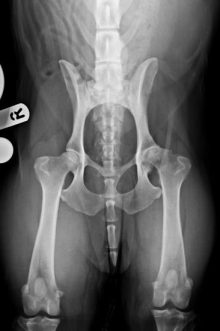
Hip Replacement Surgery
Orthopaedics |
We are now offering total hip replacement surgery. Total hip replacement can be a very effective salvage surgery for a number of conditions leading to pain or loss of hip function, including hip dysplasia, chronic hip luxation and femoral head fractures.

Immediate Mandibular Bone Reconstruction in a Dog
Oral and Maxillofacial Surgery |
Immediate Mandibular Bone Reconstruction Following Segmental Mandibulectomy in a Dog by Peter Southerden BVSc MBA DipEVDC MRCVS RCVS Recognised and European Specialist in Veterinary Dentistry

Eastcott Vet Referrals Autumn Newsletter
Newsletters |
Latest newsletter from Eastcott Referrals with articles, news and recently treated cases.

Seasonal Airway Disease
Soft Tissue |
Increasing temperatures place a strain on any dogs who suffer from significant upper airway disease. Tim Charleswoth explores the topic of Seasonal Airway Disease.

Duncan Barnes
Orthopaedics |
Duncan Barnes qualifies as a RCVS Diplomate in Small Animal Surgery (Orthopaedics)
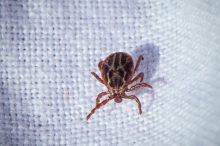
Babesia in Small Animals
Internal Medicine |
Following identification of Babesia canis in Dermacentor reticulatus ticks in Essex earlier this year and an associated small cluster of clinical babesiosis cases in untraveled dogs. Review of the presenting signs, diagnosis and management of babesiosis.