Veterinary Cardiology Referrals
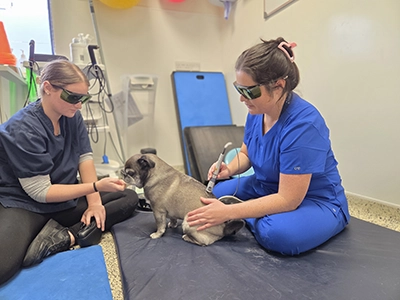 At Eastcott our team of four Veterinary Physiotherapists work closely with our multidisciplinary team of Specialists including Orthopaedics and Neurology to support in managing pain, improve the speed and quality of post-surgical recovery and ensure the best possible mobility and quality of life.
For patients who are recovering from surgery, a tailor-made rehabilitation plan will be developed for owners to follow at home. This plan will include specific advice about how to manage a pet once they have returned home alongside bespoke rehabilitation exercises to optimise recovery.
Many of our patients return for follow-up appointments with our Physiotherapy team to further their rehabilitation through updated exercise plans, ensuring the best possible outcome and increase in mobility.
Veterinary Physiotherapy Treatments
As well as hands-on techniques such as massage, range of motion, myofascial release, and joint mobilisation, patients can benefit from
- Electrotherapies including K-laser therapy (class 4)
- Omega laser therapy (class 3B)
- Pulsed electromagnetic field therapy (PEMF)
- Therapeutic ultrasound
- Transcutaneous electrical nerve stimulation machines (TENS)
- Neuromuscular electrical nerve stimulation (NMES).
Our team are also able to offer advice on environment, exercise management and mental wellbeing during rehabilitation, and recommend other therapies as appropriate, such as hydrotherapy.
Conditions treated
Our Veterinary Physiotherapy team accept both pre- and post-surgical and conservatively managed cases.
Examples of cases that we can support with physiotherapy include:
- Arthritis – osteoarthritis and immune-mediated polyarthritis
- Hip dysplasia
- Elbow dysplasia
- Cruciate ligament disease
- Patella luxation
- Broken bones (fractures) and joint dislocations
- Shoulder instability and bicipital tenosynovitis
- Osteochondritis dissecans of the elbow, shoulder, stifle or hock
- Spinal stenosis, spondylosis and spondylitis
- Lumbosacral disease
- Intervertebral disc disease
- Other neurological conditions such as ANNPE, FCE, vestibular syndrome
- Muscle strains, such as iliopsoas or gastrocnemius pathology
- General behaviour changes or change in ability
- Maintenance check-ups
Our physiotherapy team all hold an MSc in Veterinary Physiotherapy and are members of the National Association of Veterinary Physiotherapists (NAVP).